Why Our New Clutch Co Profile Makes Hiring SEO & Development Services Safer and More Affordable
Finding a reliable digital partner can feel like a gamble. The internet is full of agencies promising the moon, only to deliver cookie-cutter strategies, missed deadlines, or hidden fees that drain your budget. At The SEO Fly, we’ve always believed in absolute transparency and delivering high-impact, data-driven growth without the enterprise-level price tag. Today, we are taking that commitment a step further. We are thrilled to announce that The SEO Fly is officially listed on Clutch.co! For businesses looking to scale their digital presence, this isn’t just a new badge on our website. It is a major win for our clients. Here is exactly why our new Clutch profile makes hiring SEO and development services with us safer, more affordable, and completely stress-free. 1. 100% Verified Reviews Mean Zero Guesswork The biggest risk in hiring a digital marketing or web development agency is the unknown. Anyone can copy-paste glowing testimonials onto their own homepage. Clutch eliminates that doubt. As a leading B2B ratings and reviews platform, Clutch doesn’t just let anyone post a review. Their team personally vets and verifies every single submission through a strict verification process, often conducting direct phone interviews with clients. When you read about our work on Clutch, you are reading unbiased, unfiltered feedback from real business owners. You see exactly: How we manage timelines and communication. The actual ROI and traffic growth we deliver. Our day-to-day problem-solving approach. This level of third-party verification gives you complete peace of mind before you invest a single dollar. 2. Uncompromising Quality at Affordable Prices There is a common misconception that high-quality SEO and custom web development have to cost a fortune. Because of this, many small-to-mid-sized businesses either overpay or resort to cheap, automated services that do more harm than good. At The SEO Fly, our core philosophy is quality over quantity. We don’t focus on vanity metrics or temporary third-party shortcuts. Instead, we channel our energy into building long-term, high-value assets for your business, like seamless site architecture, optimized internal linking, custom location pages, and deeply researched content. By listing on Clutch, we are opening our doors to a global marketplace while maintaining our budget-friendly, transparent pricing structure. You get access to specialized SEO consultants and developers at a fraction of the cost of large corporate agencies. 3. Total Transparency in Project Scope & Deliverables Our Clutch profile provides a structured breakdown of our service focus, target industries, and project sizes. This data-driven transparency protects you from “scope creep” and unexpected costs. From technical SEO audits and local search optimization to custom web development, everything we do is mapped out with clear KPIs. When you hire us through Clutch, you know exactly what you are paying for, how long it will take, and what success looks like. What This Means for Your Business Moving Forward We aren’t just building links or writing code; we are building partnerships. Whether you are looking to dominate local search results in major competitive markets or looking to build a fast, high-converting website, our Clutch presence ensures accountability at every stage. By combining verified credibility with our affordable, execution-focused approach, we’ve eliminated the risk of outsourcing your digital needs. Let’s Work Together! Want to see what our clients say about us? Head over to our official Clutch Co profile to check out our verified reviews and case studies. If you are ready to scale your traffic and revenue without breaking the bank, Contact Us for a free consultation. Let’s build something great together.
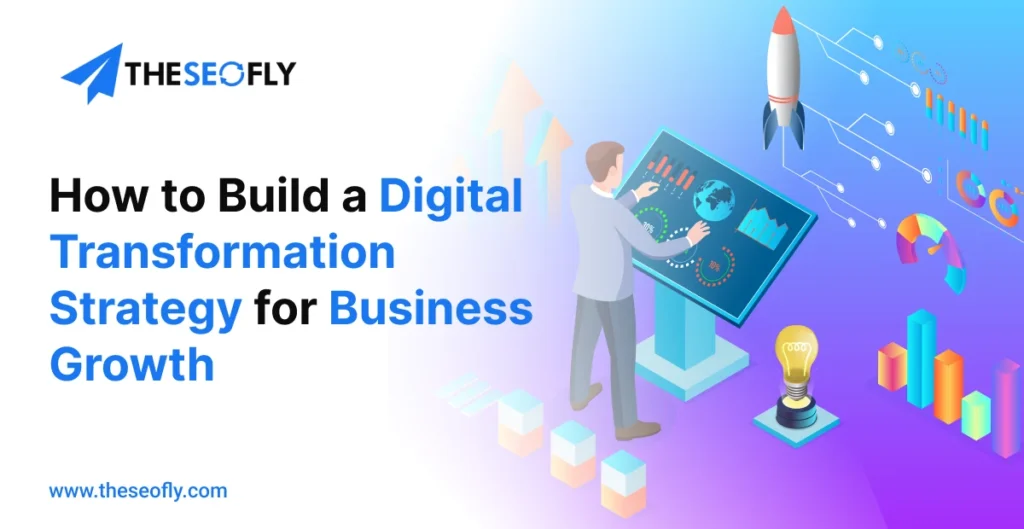
How to Build a Digital Transformation Strategy for Business Growth
In today’s digital-first economy, businesses are no longer struggling with a lack of tools; they are struggling with too many disconnected tools. Recent industry data show that modern companies use an average of over 100 SaaS applications, while enterprises may operate with more than 400 tools. The problem? Nearly 30–50% of these tools go unused, leading to wasted budgets, poor visibility, and operational inefficiencies. This is where a well-structured digital transformation strategy becomes critical. At The SEO Fly, we see digital transformation not just as technology adoption but as a growth engine powered by data, automation, and AI visibility. What is a Digital Transformation Strategy? A digital transformation strategy is a business-driven roadmap that uses technology to improve operations, enhance customer experiences, and drive scalable growth. It is not about adding more tools, it’s about: Eliminating inefficiencies Connecting systems Leveraging data intelligently Aligning technology with business outcomes With global digital transformation spending expected to reach $3.8 trillion by 2028, companies that fail to adapt risk falling behind in both market visibility and operational efficiency. Why Digital Transformation is No Longer Optional In 2026, digital transformation is not a competitive advantage; it’s a survival requirement. 1. Operational Efficiency Automation reduces manual errors, speeds up workflows, and improves productivity across teams. 2. Better Customer Experience Customers expect fast, personalized, and seamless digital interactions, and businesses must deliver. 3. Scalable Growth Digital-first companies grow faster because they can adapt quickly to market changes. 4. AI & Search Evolution With AI-driven search (like Google AI Overviews), businesses must structure data and content for machine understanding, not just human reading. The 4 Pillars of a Successful Digital Transformation Strategy 1. Technology Infrastructure Modernization Cloud adoption API-first architecture Microservices Removing legacy systems This forms the foundation of scalability and speed. 2. Data-Driven Decision Making & AI Integration Unified data systems Real-time analytics AI-driven insights Businesses that use data effectively make faster and smarter decisions. 3. Customer Experience Optimization Omnichannel experience Personalization Self-service platforms This is where transformation becomes visible to customers. 4. Culture & Change Management Leadership alignment Employee upskilling Agile mindset Without cultural alignment, transformation fails even with the best technology. Key Stakeholders in Digital Transformation A successful strategy requires collaboration across: C-Suite (CEO, CTO, CIO): Vision & investment decisions Transformation Leaders: Execution & roadmap management Cross-functional teams: Real-world implementation Technology Partners: Expertise & scalability We emphasize aligning marketing, tech, and business goals to ensure transformation delivers measurable ROI. How to Build a Digital Transformation Strategy (Step-by-Step) Step 1: Define Business Goals Ask: What problems are we solving? What outcomes do we want? How will technology support growth? Step 2: Prepare Your Team Train employees Build a culture of innovation Reduce resistance to change Step 3: Start with High-Impact Projects Focus on quick wins like: Automating manual processes Improving customer support Step 4: Choose the Right Technology Use tools that align with goals: Cloud platforms AI & automation Data analytics Avoid adopting technology without a clear purpose. Step 5: Work with the Right Partner A strong partner ensures: Scalable solutions Industry expertise Faster implementation Step 6: Measure Performance Track KPIs like: Cost reduction Productivity Customer satisfaction Step 7: Scale What Works Expand successful solutions across departments to drive organization-wide impact. Enterprise vs Startup Transformation Factor Enterprises Startups Challenge Legacy systems Rapid scaling Speed Slower Faster Risk Complex processes Poor scalability decisions ROI Timeline 18–36 months 6–12 months Strategy must be tailored to the business’s size and maturity. Capabilities Needed for Success To succeed in digital transformation, businesses need: Clear strategy Skilled digital talent Scalable technology Strong data systems Agile operating model Effective change management Digital Transformation + AI Visibility We take digital transformation beyond operations, we align it with search visibility and revenue growth. Why? Because in 2026: Search is AI-driven Content must be structured for machines Visibility = revenue We help businesses: Build AI-ready content ecosystems Optimize for search + AI engines (AEO/GEO) Turn digital transformation into measurable growth Final Thoughts Digital transformation is not a one-time project; it’s a continuous evolution. Companies that succeed are those that: Align technology with business goals Invest in people and processes Adapt to AI-driven ecosystems Businesses that manage both technology AND human adoption achieve up to 7x better outcomes. Ready to Build a Future-Ready Business? If you want to: Eliminate inefficiencies Improve visibility in AI search Scale your business with data-driven strategies Partner with The SEO Fly to design a growth-focused digital transformation strategy.
Top 10 SEO Companies in USA for 2026 (Expert Picks)
Choosing an SEO agency in 2026 is no longer just about rankings; it’s about AI visibility, technical performance, and real business growth. With Google AI Overviews, evolving algorithms, and increased competition, businesses need agencies that go beyond traditional SEO. To create this list, we evaluated 40+ SEO companies in the USA based on: Proven case studies (traffic + revenue impact) Client retention (18+ months) Transparency in strategy AI SEO readiness (AEO/GEO optimization) Technical expertise Pricing clarity Only 10 agencies met the criteria. Top 10 SEO Companies in the USA (2026) 1. The SEO Fly – Best AI-Driven SEO Company Overview The SEO Fly is built specifically for the modern search ecosystem, where visibility isn’t limited to blue links but extends to AI Overviews, voice search, and answer engines. Unlike traditional agencies, they focus on revenue-driven SEO strategies backed by strong technical execution. Key Strengths AI-first SEO (AEO + GEO strategies) Advanced technical SEO implementation Revenue-focused campaigns (not vanity metrics) Custom strategies tailored to each business Pros Strong alignment with 2026 search trends Transparent execution and reporting Deep technical + content integration Cons Premium pricing for high-performance delivery Not ideal for very small budgets Best For: Businesses looking for scalable growth, AI visibility, and ROI-driven SEO Rating: 5.0/5Standout Factor: Focus on ranking inside AI-generated results, not just search pages. 2. WebFX Overview WebFX is one of the largest SEO-focused agencies in the US, offering a full-stack digital marketing solution. Their proprietary platform allows clients to track ROI in near real-time. Key Strengths Large in-house team Proprietary analytics platform Strong enterprise-level execution 3. Ignite Visibility Overview Ignite Visibility is known for its strategic depth and strong thought leadership. The agency is particularly effective in industries like finance, SaaS, and education. Key Strengths Transparent methodology Strong leadership involvement Enterprise SEO expertise 4. Victorious Overview Victorious is a pure-play SEO agency, meaning they focus only on SEO—no bundled services like PPC or social media. Key Strengths SEO-only expertise Transparent pricing tiers Structured methodology 5. Thrive Internet Marketing Agency Overview Thrive has built a reputation for consistent SEO performance, especially for local and multi-location businesses. Key Strengths Strong local SEO expertise Long-term client retention Multi-location SEO management 6. SmartSites Overview SmartSites combines web design + SEO, making it ideal for businesses needing both a website and optimization. Key Strengths Website + SEO bundles Fast execution SMB-friendly pricing 7. NP Digital Overview Founded by Neil Patel, NP Digital is a globally recognized agency offering full-funnel marketing solutions. Key Strengths Strong brand authority Global team Proprietary tools like Ubersuggest 8. Higher Visibility Overview Higher Visibility is a results-driven agency known for steady performance, especially in B2B SEO. Key Strengths Technical SEO expertise Franchise SEO Content-led link building 9. Siege Media Overview Siege Media specializes in content-driven SEO, focusing on high-quality, link-worthy content. Key Strengths Editorial-grade content Strong link-building strategy In-house design team 10. Single Grain Overview Single Grain focuses on growth marketing, combining SEO, paid media, and content strategies. Key Strengths Full-funnel marketing approach SaaS expertise Strong content + paid integration How to Choose the Right SEO Company Before hiring, ask: Do they optimize for AI Overviews? Do they implement fixes or just suggest them? Who will manage your account? Can they show real results (revenue, not just rankings)? Common Hiring Mistakes Choosing the cheapest option Expecting quick results Ignoring technical SEO Not linking SEO to revenue Final Verdict There’s no one-size-fits-all SEO agency, but the landscape in 2026 clearly favors AI-ready, technically strong, and ROI-focused companies.
Top 10 Fintech Software Development Companies in 2026

The fintech industry is transforming how businesses and consumers manage money. From digital banking and AI-powered lending platforms to blockchain-based payments and embedded finance, financial technology is redefining the future of global transactions. According to market projections, the global fintech market is expected to grow significantly by 2033, driven by innovations in artificial intelligence, cloud computing, digital wallets, open banking, and secure payment infrastructure. As fintech adoption accelerates, businesses need technology partners capable of building secure, scalable, and compliance-ready financial solutions. Choosing the right fintech software development company can directly impact operational efficiency, customer experience, regulatory compliance, and long-term growth. At The SEO Fly, we help businesses develop modern fintech platforms that support digital transformation, automation, and scalable financial operations. Why Fintech Software Development Matters Fintech software development powers modern financial ecosystems by enabling businesses to deliver faster, safer, and more intelligent financial services. Today’s fintech platforms support: Digital banking applications Payment gateways and digital wallets AI-powered lending and risk analysis Wealth management platforms Blockchain and cryptocurrency solutions Buy Now Pay Later (BNPL) systems Financial automation and analytics Global financial technology leaders such as PayPal, Block Inc., Mastercard, Envestnet, and Upstart rely heavily on advanced software engineering to deliver seamless financial experiences at scale. As customer expectations evolve and regulations become stricter, fintech businesses require secure, cloud-native, and scalable software solutions to remain competitive. How We Selected the Top Fintech Software Development Companies To identify the leading fintech software development companies in 2026, we evaluated firms based on several important criteria: Industry Experience We prioritized companies with extensive experience in fintech software engineering, banking systems, lending platforms, payment technologies, and enterprise financial applications. Security & Compliance Companies were evaluated based on their expertise in PCI DSS, GDPR, SOC 2, AML/KYC compliance, and financial security standards. Technical Capabilities We focused on firms specializing in: Artificial Intelligence (AI) Blockchain Development Cloud Computing Mobile Banking Solutions API Integrations Digital Payment Systems Client Portfolio Preference was given to companies serving startups, financial institutions, enterprises, and global fintech organizations. Market Reputation Independent reviews, client testimonials, certifications, and industry recognition were also considered. Top 10 Fintech Software Development Companies in 2026 Company Core Expertise Key Services Best For The SEO Fly Digital Marketing, Fintech Solutions, Cloud Platforms Fintech software development, ERP integration, AI solutions, cloud transformation Enterprises & scaling fintech businesses TatvaSoft Custom Software Development Banking apps, fintech platforms, mobile solutions Mid-sized fintech firms Saritasa Enterprise Software & Mobile Apps Digital finance apps, blockchain, payment solutions Startups & enterprises Vention Dedicated Development Teams Fintech engineering, cloud systems, AI development Rapid product scaling ELEKS Enterprise Technology Consulting Banking software, cybersecurity, fintech modernization Large enterprises Innowise Digital Transformation Blockchain, fintech apps, AI automation Innovation-focused fintechs Itexus Financial Software Engineering Trading platforms, wealth management systems Financial institutions Armada Labs Fintech Product Development Lending platforms, payment software, embedded finance Fintech startups Fingent Enterprise Application Development Financial management systems, automation Enterprise finance teams Hexaview Technologies BFSI Technology Solutions Capital markets, wealth tech, fintech analytics Banking & investment firms 1. The SEO Fly The SEO Fly is a leading fintech software development company specializing in ERP integration, cloud transformation, and AI-powered financial solutions. The SEO Fly helps businesses modernize financial operations through scalable fintech applications, automation, analytics, and enterprise-grade integrations. Their expertise in digital transformation makes them a strong technology partner for growing fintech organizations. Key Services Fintech software development ERP & cloud integration AI and automation solutions Financial analytics platforms Payment and workflow automation 2. TatvaSoft TatvaSoft is a global software development company with over two decades of experience delivering enterprise-grade digital solutions across fintech, insurance, healthcare, retail, and logistics industries. The company is recognized for its scalable development approach, agile delivery models, and expertise in building secure financial software applications for startups, SMBs, and large enterprises. TatvaSoft combines strong engineering capabilities with modern technologies such as AI, cloud computing, DevOps, and enterprise integrations to help organizations modernize operations and improve customer experiences. Key Services Custom FinTech Software Development Digital Banking & Payment Solutions Enterprise Software Development Mobile App Development Cloud & DevOps Services AI & Machine Learning Solutions QA Testing & Automation ERP & CRM Integration Dedicated Development Teams Legacy Software Modernization 3. Saritasa Saritasa is a custom software development company known for delivering tailored fintech and enterprise applications with a strong focus on compliance, scalability, and user experience. The company has extensive experience building software for financial institutions, fintech startups, digital marketplaces, and accounting platforms. Saritasa emphasizes end-to-end product development, helping businesses design, develop, modernize, and scale financial platforms using AI, cloud infrastructure, and modern development frameworks. Key Services Custom Financial Software Development FinTech App Development Mobile Banking Applications AI & Machine Learning Integration Web & Mobile App Development Cloud Infrastructure Management Legacy System Modernization DevOps & CI/CD Implementation Software Architecture Consulting Dedicated Development Teams 4. Vention Vention is an international software engineering company specializing in custom fintech, SaaS, enterprise, and cloud-native solutions. With access to a large network of developers and engineers, Vention helps businesses accelerate digital transformation initiatives and scale product development efficiently. The company is known for supporting startups and enterprises with dedicated engineering teams, fintech platform development, AI integration, and scalable cloud architectures. Key Services Custom FinTech Software Development Dedicated Engineering Teams AI & Data Engineering Cloud Application Development Enterprise Software Solutions Mobile App Development Blockchain & Payment Systems DevOps & Infrastructure Automation SaaS Platform Development API & Third-Party Integrations 5. ELEKS ELEKS is a global technology consulting and software engineering company delivering digital transformation services for fintech, banking, healthcare, logistics, and retail organizations. ELEKS is widely recognized for its expertise in enterprise-grade fintech systems, cybersecurity, AI, data science, and cloud modernization. The company works with enterprises looking to optimize financial operations, improve digital experiences, and build secure, scalable platforms. Key Services FinTech Software Engineering Digital Banking Solutions Cybersecurity & Risk Management AI & Advanced Analytics Cloud Migration & Modernization Blockchain Development Enterprise Application Development Product Design & UX/UI Services QA & Software Testing IT Consulting & Digital Transformation 6. Innowise Innowise is a
Is Traditional SEO Dead? The Rise of Zero-Click Search
The digital marketing landscape is continuously evolving, and with it, the strategies businesses use to gain online visibility. One of the most talked-about changes in recent years is the rise of zero-click search—search queries where users get the answer directly on the search engine results page (SERP) without clicking any link. This phenomenon has left many marketers and business owners asking: Is traditional SEO dead? At The SEO Fly, we believe the answer is a resounding no, but it’s crucial to understand what zero-click search means for your SEO strategy today and going forward. What is Zero-Click Search? Zero-click search happens when users find the information they need directly on Google’s results page, without needing to visit any external website. This can happen via: Featured snippets: Summaries at the top of search results answer questions directly. Knowledge panels: Detailed information boxes about people, places, or things. Local packs: Maps and local business listings with phone numbers and reviews. Direct answers: Quick answers such as weather, calculations, or sports scores. For example, if you search “What’s the weather in New York?” Google shows the weather forecast right on the results page, so most users don’t need to click further. Why Is Zero-Click Search Rising? Google’s mission is to provide users with the most useful, fastest answers. With advances in AI, natural language processing, and structured data, Google can deliver direct answers quickly and efficiently. Users appreciate this convenience, resulting in more zero-click searches across diverse queries. The mobile revolution also plays a role; smaller screens and voice assistants encourage Google to prioritize quick, on-page answers. Does Zero-Click Search Mean Traditional SEO Is Dead? Not at all. While zero-click search has changed how users interact with search results, traditional SEO still matters more than ever. Here’s why: 1. Search Volume and Behavior Are Diverse Zero-click search mainly impacts informational queries, especially question-based searches. But many queries still require clicking through—for example, product purchases, in-depth research, or local service bookings. 2. Organic Clicks Are Just One Part of SEO SEO isn’t only about clicks. It’s about brand visibility, trust, user experience, and guiding customers through the buying journey. A featured snippet may provide an answer, but it can also increase brand awareness, driving more branded searches and eventual clicks. 3. Optimizing for Zero-Click Can Boost Traffic By optimizing content to appear in featured snippets and knowledge panels, your brand still gains significant exposure. At The SEO Fly, we focus on crafting content that Google can easily understand and present, making zero-click an asset rather than a threat. How to Adapt Your SEO Strategy to Zero-Click Search If your current SEO strategy ignores zero-click search, you’re missing a big opportunity. Here’s how The SEO Fly recommends evolving your approach: 1. Target Featured Snippets Structure your content with clear, concise answers to common questions. Use bullet points, numbered lists, and tables to improve snippet chances. Incorporate relevant keywords naturally in headers and paragraphs. 2. Leverage Schema Markup Adding schema (structured data) helps Google understand your content better, increasing the chance to appear in rich results like FAQs, reviews, and events. 3. Focus on Local SEO Optimize Google Business Profile and local citations to show up in local packs and maps—common zero-click results that drive foot traffic and phone calls. 4. Create Content for All Funnel Stages While informational queries may result in zero-click, transactional and commercial searches still lead to clicks. Build content that serves all stages of the customer journey—from awareness to decision. 5. Use Analytics to Track Engagement Beyond Clicks Google Analytics and Search Console data should be analyzed with a broader lens, considering impressions, engagement, and brand lift, not just clicks. Why Partner with The SEO Fly? Navigating the evolving SEO landscape requires expertise and a data-driven approach. At The SEO Fly, we combine traditional SEO best practices with zero-click optimization strategies to maximize your brand’s online presence. Our services include: Comprehensive SEO audits Content optimization for featured snippets Advanced schema implementation Local SEO and Google Business Profile management Continuous performance tracking and strategic adjustments We help businesses not just survive but thrive amidst the rise of zero-click search. Conclusion Zero-click search is transforming how users access information online, but it doesn’t signal the death of traditional SEO. Instead, it challenges marketers to expand their tactics and embrace new opportunities. By optimizing for both traditional organic rankings and zero-click results, you can capture more audience attention, build trust, and drive sustainable growth.
Best Free SEO Tools for 2025
Whether you’re an SEO beginner, a small business owner, or a digital marketing pro, having the right tools can make a major difference in your results. But not every effective SEO tool has to cost a fortune. Many of the best features in 2025 are offered completely free. At The SEO Fly, we believe in smart and efficient SEO that gets results. That’s why we’ve compiled this ultimate list of the best free SEO tools for 2025, across keyword research, content optimization, technical SEO, and analytics. 1. Google Search Console Use for: Performance tracking, indexation issues, keyword performance Still, the backbone of technical SEO, Google Search Console, lets you see how your site performs on Google Search. You can find out which keywords are driving traffic, fix indexing issues, and submit sitemaps. Why it’s great: It gives you actual data directly from Google and is completely free. 2. Google Keyword Planner Use for: Keyword research and search volume estimates While built for Google Ads, this tool offers excellent data for SEO as well. You can explore keywords by region, get monthly search volume, and identify related queries. Pro tip from The SEO Fly: Use it alongside other tools like Ubersuggest or AnswerThePublic for more content ideas. 3. Ubersuggest (Free Tier) Use for: Keyword research, backlink data, site audits Neil Patel’s Ubersuggest has become a go-to SEO platform. The free version gives you access to keyword suggestions, top-ranking pages, and backlink overviews. Limitations: Daily search limits, but very usable for freelancers and small businesses. 4. AnswerThePublic Use for: Finding content ideas and user intent keywords This tool pulls Google autocomplete data and turns it into useful question-based keyword maps. It’s especially useful for content marketers and bloggers. Use it to: Create FAQ pages, blog ideas, or voice search-optimized content. 5. Screaming Frog SEO Spider (Free Version) Use for: Technical SEO audits, broken links, redirects, and duplicate content The desktop-based SEO crawler lets you scan up to 500 URLs in the free version. You can analyze meta tags, heading structure, canonical tags, and more. Tip: Use it weekly to spot broken internal links or thin content. 6. Ahrefs Webmaster Tools Use for: Site audit, backlink analysis, performance overview Ahrefs offers a free version for verified website owners. You get access to basic backlink data, site health issues, and content suggestions. Why The SEO Fly loves it: It’s a gateway into one of the best premium SEO tools — free, yet powerful. 7. MozBar Use for: On-page SEO analysis, domain authority check, SERP metrics MozBar is a Chrome extension that lets you analyze any page on the web. You can view the page authority, domain authority, and even highlight nofollow links. Useful for: Competitor analysis and outreach research. 8. SEO Minion Use for: SERP previews, hreflang checks, on-page audits Another excellent Chrome extension that’s completely free. SEO Minion lets you check title tags, meta descriptions, heading structure, and compare SERP results across locations. The SEO Fly uses this during quick audits and when testing multiple pages for meta tag quality. 9. Google Trends Use for: Content planning, trend forecasting, keyword seasonality See what’s trending now and track keyword popularity over time. It’s especially useful for creating evergreen and seasonal content calendars. Pro tip: Combine with Keyword Planner to validate rising terms. 10. CanIRank Use for: Keyword difficulty analysis and actionable suggestions Unlike other tools that just give data, CanIRank helps you understand why a page ranks and how you can outrank it. The free version is great for quick strategy insights. Ideal for: Beginners who need direction on what to optimize next. 11. Bing Webmaster Tools Use for: Technical SEO and site analytics for Bing Often overlooked, but Bing has its suite of tools like GSC. It’s valuable, especially for older audiences, local search, or Microsoft-powered searches (Edge browser users). Bonus: It even shows some keyword data Google hides. 12. GTmetrix Use for: Page speed insights and Core Web Vitals Page speed is a confirmed ranking factor. GTmetrix offers detailed speed reports and optimization tips to improve load times and user experience. Tip: Use alongside Google PageSpeed Insights for a complete picture. Final Thoughts You don’t need a big budget to get started with SEO. The tools listed above are trusted by agencies, freelancers, and businesses worldwide—and they’re all free (at least at the basic level). At The SEO Fly, we’ve used these tools across hundreds of projects to deliver measurable improvements in search rankings and ROI. Whether you’re building your SEO strategy from scratch or refining an existing one, these free tools can help you move forward with confidence.
YouTube SEO: 10 Ranking Factors You Can’t Ignore

In 2025, YouTube has become more than just a video-sharing platform—it’s a full-blown search engine and a key driver of brand visibility. With over 2.7 billion active users, it’s the second-largest search engine after Google. If your content isn’t ranking, you’re missing out on massive organic reach. At The SEO Fly, we specialize in helping creators and businesses scale their presence through smart, sustainable YouTube SEO. Whether you’re a beginner or a seasoned YouTuber, this guide covers the 10 YouTube ranking factors you can’t ignore if you want your videos to be seen, clicked, and shared. 1. Video Title Optimization The title of your video is one of the most critical ranking signals. It should be: Keyword-rich Naturally readable Click-worthy (not clickbait) Use tools like TubeBuddy or VidIQ to research high-volume, low-competition keywords. At The SEO Fly, we recommend placing the primary keyword within the first 60 characters. 2. High-Retention Watch Time YouTube prioritizes videos that keep viewers watching. Average percentage watched (APW) and absolute watch time are both strong indicators of content value. Tips to improve watch time: Hook viewers in the first 15 seconds Structure your content for flow Use B-roll and on-screen prompts Remove fluff and stay on topic 3. Keyword-Rich Video Description Your video description helps YouTube understand what your content is about. It also provides valuable context to users. Best practices: Add your main keyword within the first 1–2 lines Use secondary keywords naturally Include timestamps, links, and a compelling CTA Write at least 200–300 words per video description 4. Tags Still Matter (Slightly) While not as influential as before, tags still help YouTube associate your video with related content and improve discovery. Use a mix of: Broad terms (e.g., “digital marketing”) Specific phrases (e.g., “how to rank YouTube videos in 2025”) Misspellings or slang, if relevant 5. Engagement Metrics: Likes, Comments, Shares YouTube tracks how viewers interact with your video. High engagement signals value and relevance. Boost engagement by: Asking questions in your video and comments Adding polls or community posts Encouraging “like & subscribe” organically Replying to every comment 6. Click-Through Rate (CTR) Your thumbnail and title combo heavily influence CTR. If people aren’t clicking, YouTube won’t keep showing it. Improve CTR by: Designing custom, high-contrast thumbnails Using readable text and facial expressions Testing variations via A/B testing tools Avoiding misleading visuals or titles 7. Channel Authority Channels that publish consistently and maintain niche authority are favored in YouTube’s algorithm. Building topical relevance can boost all your future uploads. Ways to build authority: Stick to a core theme Publish on a regular schedule Use playlists to group related videos Build internal linking between videos 8. Captions & Transcripts Adding closed captions and transcripts improves accessibility and SEO. YouTube indexes this content and uses it for contextual relevance. You can: Use YouTube’s auto-caption feature (edit for accuracy) Upload SRT files manually Include keyword-rich scripts for each video 9. Video File Name and Metadata Before you upload, name your file with your target keyword (e.g., youtube-seo-tips-2025.mp4). Although a minor signal, it helps confirm topical relevance. Other metadata includes: Category selection Language settings Video location (for local content) 10. Session Time & Suggested Video Placement YouTube rewards videos that keep users on the platform longer. If your video leads to more views (yours or others), it boosts your ranking. How to extend session time: Use end screens & cards linking to your other videos Recommend playlists in the description Use CTAs like “Watch This Next” inside your video Bonus Tip: Go Live & Use Shorts In 2025, YouTube Shorts and live videos will get favored placement. Diversifying content formats can help you attract new viewers and improve algorithmic favorability. Conclusion Ranking on YouTube isn’t about tricking the algorithm—it’s about creating valuable content and optimizing it smartly. By following these 10 ranking factors, you can increase your visibility, watch time, and subscriber base. At The SEO Fly, we help creators, brands, and educators optimize their YouTube strategy from content ideation to in-depth SEO. Whether you’re just starting or want to scale your channel growth, our expert team is ready to help.
How to Create a Winning Topic Cluster in Any Niche
In today’s SEO landscape, creating a topic cluster is more than just a content strategy—it’s a long-term ranking game. Google has evolved far beyond keywords. It now focuses on context, depth, and semantic relationships between pages. That’s why topic clusters are key to increasing topical authority, improving crawlability, and delivering value to both users and search engines. Whether you’re in health, SaaS, finance, education, or e-commerce, The SEO Fly brings you a clear roadmap to building a topic cluster that drives rankings, traffic, and conversions. What is a Topic Cluster? A topic cluster is a group of interlinked pages focused on a single core topic. It usually includes: A pillar page: A comprehensive, in-depth piece covering the broad subject. Cluster content: Supporting articles that target long-tail keywords or subtopics. Internal links: Connections between the pillar and its cluster pages. This structure signals to search engines that your website is an authoritative source on the subject. Why Do Topic Clusters Work? Search engines like Google now use semantic indexing and intent-based algorithms. Instead of ranking individual pages based solely on keywords, they look for depth, relevance, and how well your content ecosystem addresses user queries. Benefits of topic clusters: Improve keyword rankings across multiple variations Enhance site structure and user navigation Boost time on site and reduce bounce rate Strengthen topical authority in your niche Step-by-Step: How to Build a Topic Cluster 1. Identify Your Core Topic Start by choosing a broad topic that aligns with your business goals and audience needs. It should be a subject you want to be known for—and one that has strong search interest. Example: Niche: Fitness Core Topic: “Home Workouts” Niche: B2B SaaS Core Topic: “Project Management Software” Use tools like Google Keyword Planner, Ahrefs, or Semrush to validate keyword volume and competition. 2. Map Out Subtopics and Questions Next, break the broad topic into narrower, high-intent subtopics. These form your cluster content. Use: “People Also Ask” on Google AnswerThePublic Reddit and Quora Competitor blog categories Example cluster for “Home Workouts”: Best Equipment for Home Workouts Home Workouts Without Weights Home Workout Plans for Beginners Home Workouts vs Gym Training Mistakes to Avoid in Home Workouts Each of these will be a dedicated blog or content piece that links back to the pillar page. 3. Create a Pillar Page The pillar page is the foundation of your topic cluster. It should be long-form (2,000+ words), highly structured, and offer a comprehensive overview of the main topic. Think of it as a resource hub. It must: Provide value without fluff Link to all cluster content Answer broad user intent Be optimized for SEO (meta, headers, links, etc.) At The SEO Fly, we recommend including a table of contents, FAQs, visuals, and internal/external links in the pillar. 4. Write and Optimize Cluster Content Each subtopic should be a high-quality, stand-alone post that explores one specific aspect in depth. These blogs should: Target long-tail or question-based keywords Include multimedia (images, video, infographics) Naturally link to the pillar and other clusters Use structured headers and schema markup when possible Consistency is key—stick to a publishing schedule to maintain momentum. 5. Interlink Strategically Internal linking connects the SEO dots. Your cluster content must: Link to the pillar page using relevant anchor text Receive a link back from the pillar Cross-link with other related cluster posts This creates a web of related pages, which helps both users and search engines understand your content hierarchy. 6. Promote and Monitor Performance Publishing is just half the job. Share your cluster across: Email newsletters Social media platforms Community forums (Reddit, LinkedIn groups) Use Google Search Console and tools like GA4, Ahrefs, or SEMrush to track: Traffic to pillar and cluster pages Keyword movement CTR and bounce rates Update your content every few months to keep it fresh and competitive. Bonus Tips from The SEO Fly Don’t overload your cluster: 5–10 supporting pages are enough for most small to medium sites. Use consistent URL structures: It’s better for SEO and organization. Focus on user intent: Don’t write for the algorithm—write for your audience. Add unique value: Use original insights, expert quotes, or data to stand out. Don’t forget schema: Use FAQ, How-To, and Article schema where applicable. Final Thoughts Creating a topic cluster isn’t just about SEO—it’s about becoming the go-to resource in your niche. With the right strategy, structure, and optimization, topic clusters can unlock consistent organic growth for your business. At The SEO Fly, we help brands build intelligent, scalable content ecosystems that dominate rankings and serve user intent. Whether you’re starting from scratch or reworking existing content, we’ll help you create a winning topic cluster that lasts.
Core Web Vitals in 2025: What’s Changed?
In 2021, Google introduced Core Web Vitals as part of its Page Experience update to encourage better user experiences. Fast-forward to 2025, and these performance-based metrics have evolved significantly. If you’re still optimizing for LCP, FID, and CLS alone, you’re behind. Google has shifted its focus toward more real-world interactivity and user-centric performance. In this blog, The SEO Fly, your trusted SEO partner, breaks down what’s changed in Core Web Vitals in 2025, what it means for your rankings, and how to stay ahead in this ever-evolving SEO landscape. What Are Core Web Vitals? (Quick Refresher) Core Web Vitals are a set of performance metrics introduced by Google to measure page speed, responsiveness, and visual stability. They influence search rankings and user satisfaction. Originally, the three core metrics were: Largest Contentful Paint (LCP) – Measures load speed First Input Delay (FID) – Measures interactivity Cumulative Layout Shift (CLS) – Measures visual stability These metrics are designed to reflect the real user experience on your site. What’s New in Core Web Vitals 2025? Google has made several key updates in 2025 to improve how Core Web Vitals reflect modern website experiences: 1. Interaction to Next Paint (INP) Replaces FID As of March 2024, Interaction to Next Paint (INP) officially replaced First Input Delay (FID) as the new responsiveness metric. Why the Change? FID only measured the first interaction. INP offers a more comprehensive view of how responsive your site is to all user interactions (like clicking, scrolling, or typing). Good INP: Under 200 milliseconds Needs Improvement: 200–500 ms Poor: Over 500 ms The SEO Fly Tip: Audit your JavaScript execution and event handlers to keep INP under control. 2. LCP Thresholds Tightened Google has updated the LCP guidelines, expecting even faster load speeds, especially for mobile users. Old Good Score: Under 2.5s New Good Score (2025): Under 2.0 seconds on both desktop and mobile. Why? Users now expect near-instant experiences, thanks to widespread use of 5G and performance-first frameworks like Astro and Svelte. 3. CLS Expanded to Include Animation Stability In 2025, CLS now also considers layout shifts caused by animations. If an animation moves text or buttons without proper constraints, it will negatively impact your CLS score. This means fancy transitions or sliding carousels need stricter control. Pro Tip from The SEO Fly: Use transform and opacity for animations instead of top, left, or height, which can trigger layout shifts. 4. New Experimental Metric: Smoothness Google is experimenting with a Smoothness metric, focused on frame consistency and animation flow, particularly on scroll-heavy or mobile-first sites. Though not officially part of Core Web Vitals yet, it’s likely to be included in the Page Experience Signals by late 2025. Why Core Web Vitals Still Matter in 2025 Some SEOs believed Google would scale back the impact of Core Web Vitals. But the opposite has happened. Ranking Impact Core Web Vitals remain a confirmed ranking factor, especially when other SEO signals (like backlinks or content quality) are close. Sites with excellent Core Web Vitals consistently show better dwell time, lower bounce rates, and higher conversions. User Trust Faster and more stable pages lead to better user retention. In e-commerce, a 0.1s improvement in load speed can increase conversions by 8% (Google data). How to Optimize for Core Web Vitals in 2025 1. Use Modern Tech Stacks Switch to performance-focused frameworks like Next.js, Svelte, or Astro for better INP and LCP scores. 2. Defer or Lazy Load Non-Essential Elements Images, third-party scripts (like chat widgets), and ads should be loaded only when needed. 3. Prioritize Critical CSS Inline above-the-fold CSS to reduce render delay. Use tools like Critical or PageSpeed Insights for suggestions. 4. Implement a CDN A Content Delivery Network ensures your content loads quickly from any location. 5. Use Google’s Tools Regularly PageSpeed Insights Lighthouse Reports Chrome User Experience Report (CrUX) Web Vitals Extension for Chrome What The SEO Fly Can Do for You At The SEO Fly, we specialize in technical SEO and performance optimization. Our Core Web Vitals audits come with: Full performance diagnostics Custom action plan to improve metrics Code-level recommendations for developers Continuous monitoring post-implementation Whether you’re running an e-commerce store, SaaS platform, or content-heavy site, we help you rank faster, load quicker, and convert better. Conclusion In 2025, Core Web Vitals will be more nuanced, technical, and essential than ever. Google’s emphasis on real user metrics means that page experience is no longer optional—it’s critical. Stay ahead of the curve by optimizing for INP, tightening your LCP, and watching out for layout shifts caused by animations. Partner with The SEO Fly to ensure your site delivers the speed and performance users expect.
The Ultimate Local SEO Checklist for 2025

Introduction Local SEO is no longer just about showing up on Google Maps. In 2025, it’s about dominating your local niche with real visibility, high engagement, and trust-building tactics that align with how customers search today. Whether you’re a dentist, restaurant, multi-location business, or service provider, this ultimate local SEO checklist by The SEO Fly will help you gain a competitive edge and stay visible where it matters most. Let’s dive in. 1. Google Business Profile Optimization Your Google Business Profile (GBP) remains the foundation of local SEO. In 2025, Google is prioritizing complete, interactive, and frequently updated profiles. Checklist: Claim and verify your GBP Add primary and secondary business categories Upload high-quality images (geotagged where possible) Write a compelling, keyword-rich business description Add business hours and holiday hours Enable messaging and bookings (if applicable) Use relevant services/products with details Get a custom short name URL 2. Local Keyword Research Local keyword intent is more important than ever. Focus on “near me”, geo-modified, and service+location phrases. Checklist: Use tools like Google Keyword Planner, GSC, and AlsoAsked Target long-tail keywords like “best pediatric dentist in Austin” Create city-based keyword variations Analyze competitors’ top-performing local pages 3. On-Page Local SEO Elements Search engines still rely on strong page signals. Each local landing page should be optimized with location-specific content and technical best practices. Checklist: Use target keywords in the title tag, H1, and meta description Add schema markup (LocalBusiness, Organization, Review) Embed Google Maps with your exact location Include Name, Address, Phone (NAP) in the footer Link to nearby cities or neighborhoods strategically 4. Location Landing Pages If your business serves multiple areas, unique local landing pages are a must. Checklist: Create one page per location (not one generic page) Add location-specific testimonials, team info, or events Include directions, parking info, and localized calls to action Avoid duplicate content – make each page truly local 5. Online Reviews & Reputation Management Google favors businesses with consistent, recent, and positive reviews. Checklist: Encourage customers to leave reviews on GBP and other platforms Respond to every review (positive or negative) Monitor brand mentions and set up alerts Use review generation tools (like Birdeye or Podium) 6. Local Citations & NAP Consistency Citations still matter in 2025 for local SEO authority and trust. Ensure that your business info is accurate across the web. Checklist: Submit to top directories (Yelp, Yellow Pages, Foursquare, etc.) Use data aggregators like Neustar, Data Axle, or Yext Audit and fix NAP inconsistencies regularly Include niche directories (industry or location-specific) 7. Mobile Optimization & Core Web Vitals Most local searches happen on mobile. A poor mobile experience means lost business. Checklist: Use responsive design Ensure your site passes Core Web Vitals (LCP, FID, CLS) Compress images, use lazy loading Enable click-to-call buttons and easy navigation 8. Local Link Building Local backlinks show Google that your business is relevant in your community. Checklist: Reach out to local blogs, newspapers, and event pages Sponsor community events or charities, and ask for backlinks Join local chambers of commerce and get listed Create shareable local content (like guides or infographics) 9. Social Media Signals Social media doesn’t directly impact rankings but strengthens brand signals and engagement. Checklist: Keep business info consistent across social platforms Share Google posts regularly through GBP Engage with local community hashtags and events Post local photos, reels, or behind-the-scenes content 10. Monitor Local SEO Performance Tracking your results helps refine your strategy. Use a mix of tools to measure visibility, traffic, and actions. Checklist: Use Google Search Console to track local queries Monitor GBP insights for calls, clicks, and views Track ranking changes using tools like BrightLocal or Whitespark Set up call tracking and form submission monitoring Pro Tip: Prioritize User Intent Over Algorithm Tricks In 2025, Google rewards businesses that serve real users, not just check SEO boxes. Focus on user experience, local relevance, and consistent branding across platforms. Conclusion Local SEO in 2025 is more nuanced than ever—but also more rewarding. By following this comprehensive checklist from The SEO Fly, you position your business to dominate the local SERPs, connect with nearby customers, and build trust in your community.